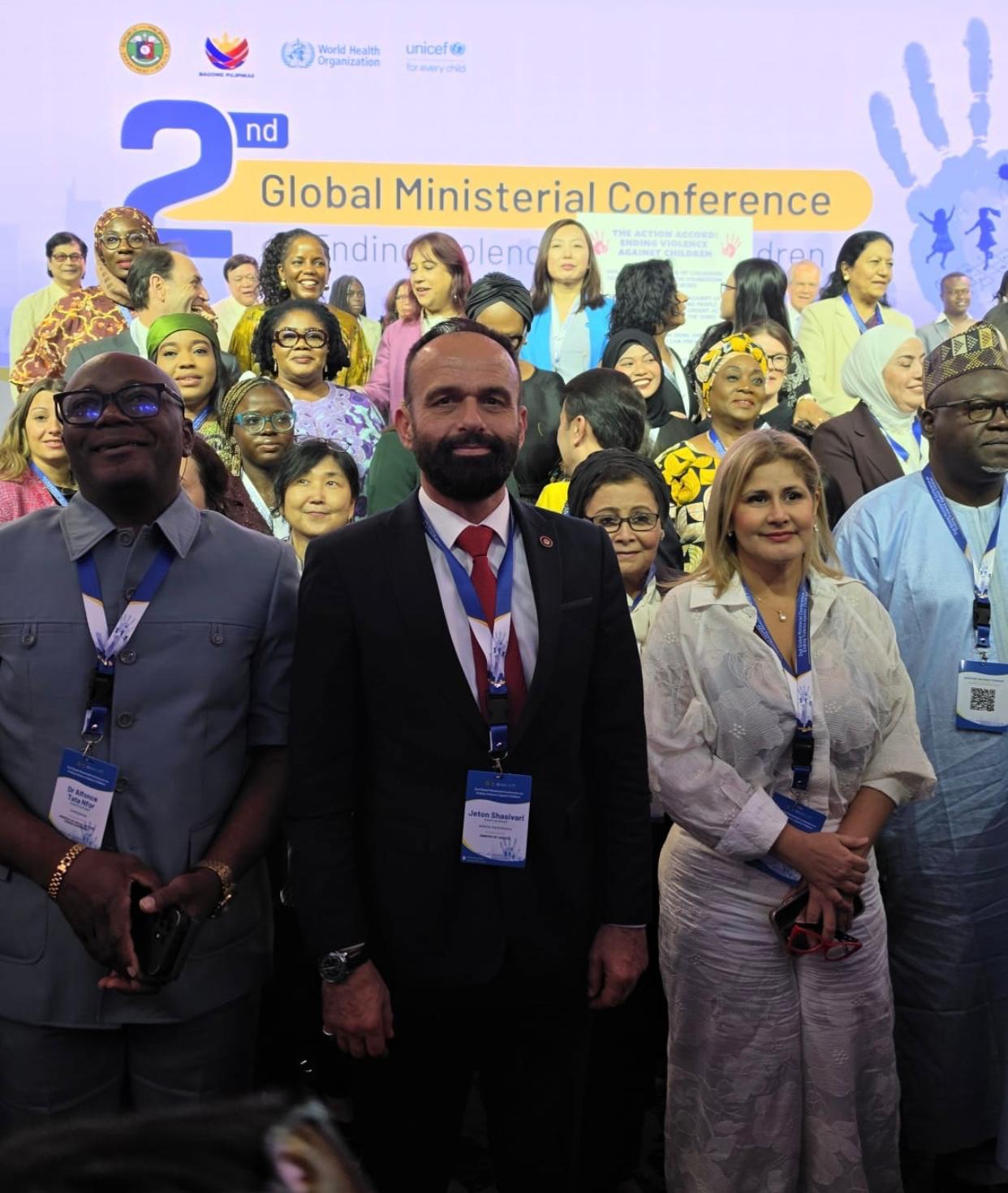
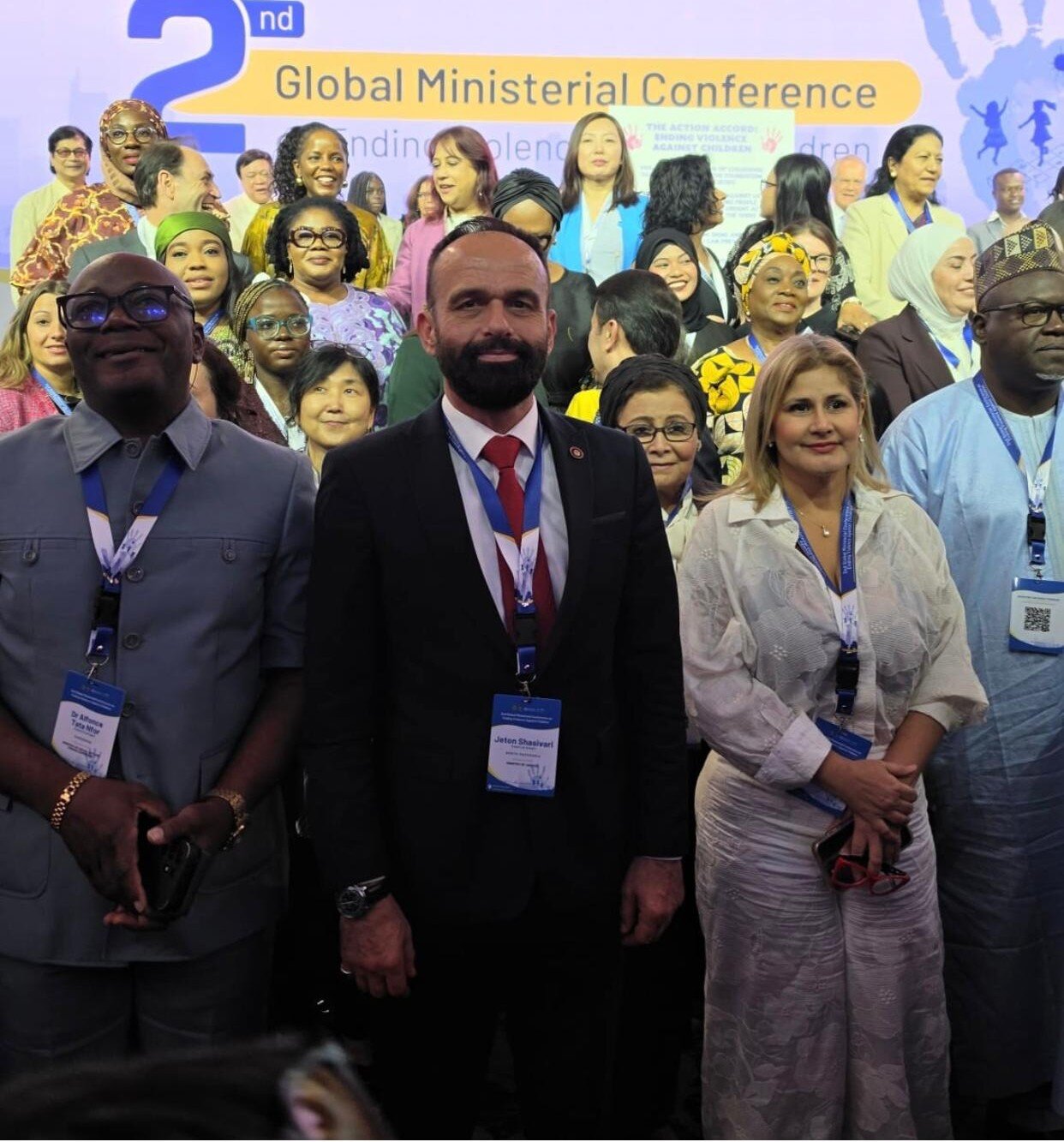
The Minister of Justice, Jeton Shasivari, is participating in the Second Global Ministerial Conference to End Violence against Children, which is being held in Manila, Philippines, with the participation of ministers from 131 countries, representatives of international institutions, experts and organizations from around the world.
The conference is organized by the Government of the Philippines, in partnership with the World Health Organization (WHO) and UNICEF, with the aim of strengthening international cooperation and developing concrete solutions to prevent and eradicate all forms of violence against children.
Within the framework of the conference, Minister Shasivari participated in the panel discussion "Europe: Shared Challenges, Shared Solutions", dedicated to the common challenges in preventing violence against children and the possibilities for overcoming them through coordinated solutions.
In his address, the Minister highlighted three key challenges: the spread of new forms of violence through digital technologies, the inconsistent implementation of existing legal guarantees and the lack of coordination between institutions responsible for child protection.
Special attention was paid to the risks posed by accelerated technological development. Digital platforms create new opportunities for abuse, sexual exploitation, harassment and the dissemination of harmful content, with violence that can continue outside the school, family or environment in which the child lives. Such phenomena require modern legal solutions, more efficient reporting mechanisms, specialized investigative capacities and greater responsibility of digital platforms.
In this regard, the Minister informed that the Republic of North Macedonia, as a contracting party to the Council of Europe Convention on the Protection of Children against Sexual Exploitation and Sexual Abuse, known as the Lanzarote Convention, is undertaking activities to further align its criminal legislation with international standards.
The preparation of the new Criminal Code represents an opportunity to overcome the existing legal gaps in the protection of children from violence in the digital space. One of the commitments presented at the conference concerns precisely the amendment of the criminal and related legislation, with a special emphasis on the protection of children aged 14 to 17 from online violence and sexual exploitation.
In addition to the legal amendments, the need for greater digital literacy among children, parents, teachers and professionals working with children was emphasized, as well as the establishment of accessible and safe mechanisms for reporting abuse. Prevention also requires cooperation with technology companies for the timely detection and removal of content that constitutes child abuse.
The second challenge addressed by the Minister is the difference between the legally provided protection and its implementation in practice. The address highlighted the findings of the "Disrupting Harm" research, which indicate an insufficient number of professionals, a high caseload, lengthy procedures and cases in which children are exposed to repeated interrogations before various institutions.
To overcome these weaknesses, it is necessary to introduce standardized protocols for interviewing children, engage specialized professionals, establish clear deadlines for handling cases involving children, and develop integrated services through which the child will be able to report violence in a safe environment, without unnecessary repetition of the traumatic experience.
The Minister also referred to the Law on Justice for Children, adopted in 2024, which provides for special procedural guarantees, protection of the best interests of the child, and individual assessment of the needs of child victims. The law establishes deprivation of liberty as a measure of last resort, guarantees the right of the child to be informed of his or her rights, and provides for the accompaniment of a parent, guardian, or other designated adult during questioning.
Of particular importance are the provisions aimed at preventing secondary victimization, including limiting medical examinations to cases where they are necessary for the criminal procedure, as well as the application of special measures for procedural protection according to the individual needs of the child.
The third challenge concerns institutional coordination. The Minister pointed out that child protection cannot be effective if educational institutions, health services, social work centers, police and judicial authorities act in isolation, without clearly defined obligations and mechanisms for monitoring each reported case.
In this regard, the need for determining responsible persons for case coordination, clear procedures and deadlines for institutional action, was highlighted.