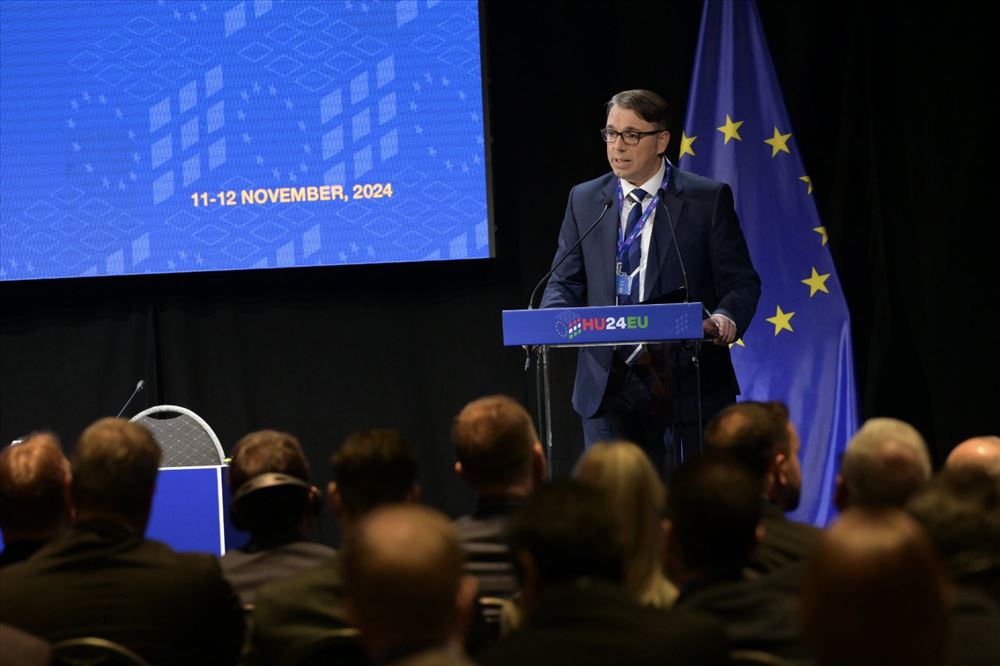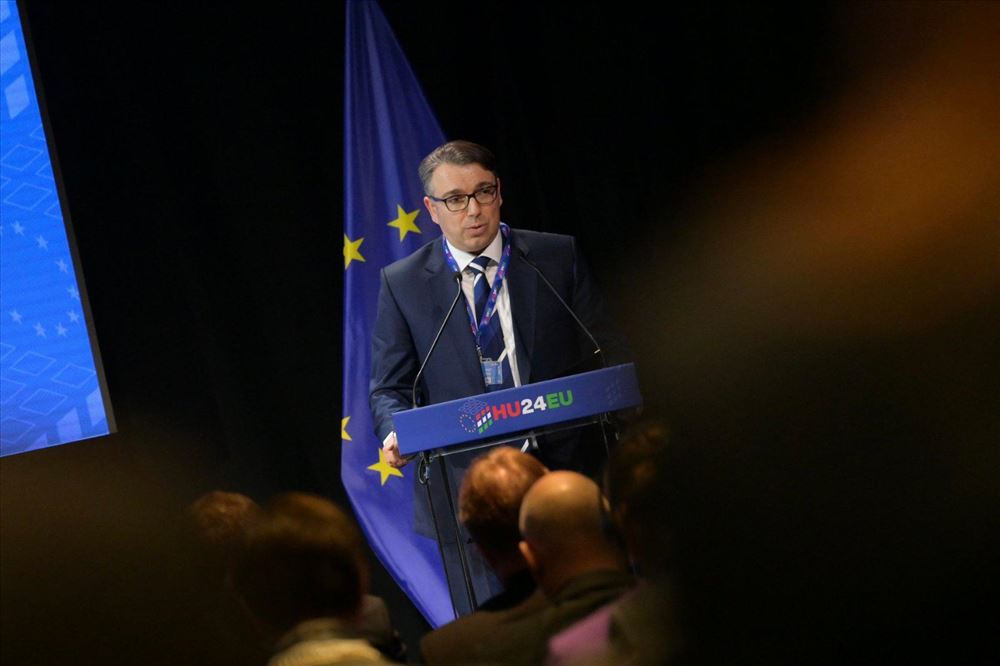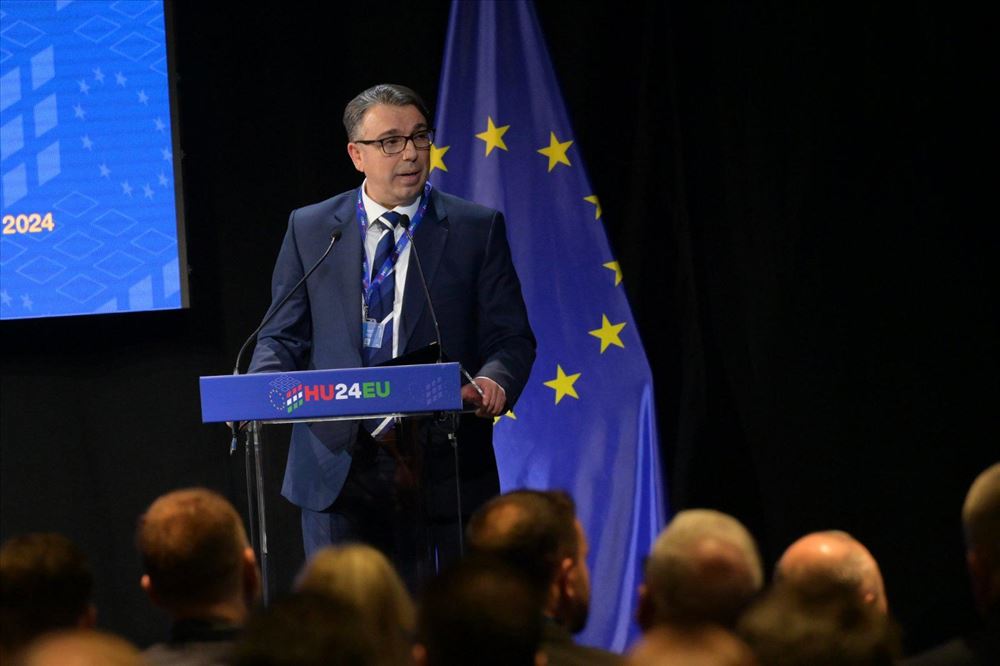
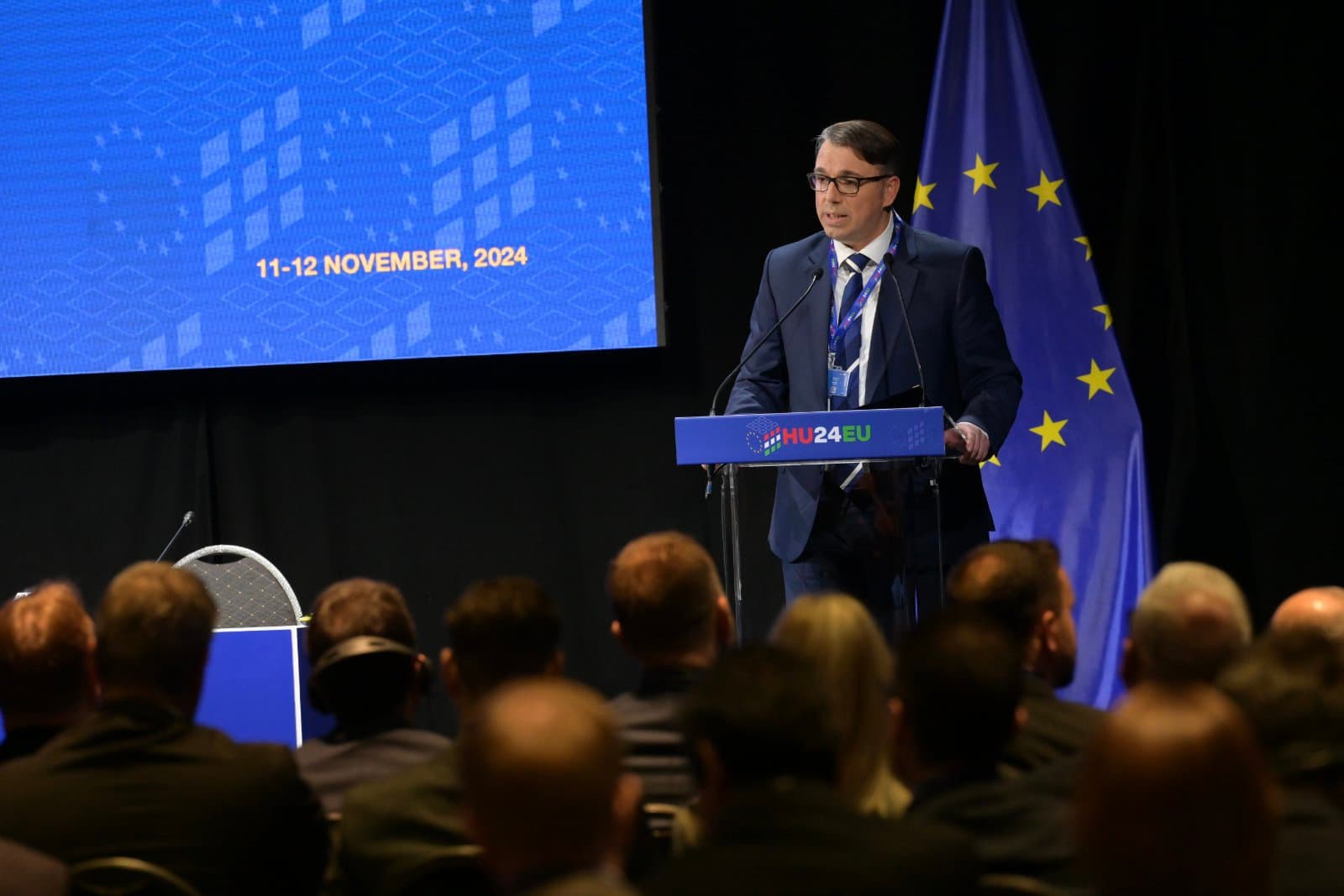
The Minister of Justice, Igor Filkov, at the invitation of the Minister of Justice of Hungary, Bence Tuzson, participated in the International Conference "Legal Competition - Legal Instruments for a More Competitive Europe" which is being held in Budapest. This important conference, organized within the framework of the Hungarian Presidency of the Council of the EU, brought together a large number of ministers and delegations from Europe in one place in order to explore new regulatory trends, stimulating a debate on improving the legal framework.
The Minister of Justice, Igor Filkov in his address, addressed the challenges and novelties brought by the digital age, as well as reforms in the judiciary.
"From the first day after I received the mandate to lead the justice sector, we began reforms to establish an independent justice system, based on purposeful and comprehensive analyses, public debates with the expert public and civil society, and we strive to gradually achieve the desired effects and results. The reforms in the judiciary and its legal framework are taking place in accordance with the Development Sector Strategy for Justice for the period 2024 - 2028 "
Speaking about our path towards European integration and enlargement, Minister Filkov expressed hope that common interests will rise above the national interests of certain member states, which will allow us to move to the next phase of negotiations with the opening of the first cluster.
"I come from a country, and I am part of a nation, which for a really long period, for almost 20 years, has been striving to fulfill a desire and aspiration for integration and an equal place in the Union, to which it belongs. On the path to achieving our ultimate goal, a membership in the European Union, we are faced with a series of challenges and prerequisites, the fulfillment of which is expected and acceptable.However, raising our personal determination and sense of belonging as a people and nation, to the level of a bilateral obstacle to our further European prospects, you will all agree that it contradicts the ideas and values on which the European Union is based,” Filkov emphasized.
The Minister also addressed the issue of deregulation, indicating that in law it is achieved exclusively through the application of a quality legal framework, as the main task of the courts, i.e. judges. Filkov emphasized that:
“The quality of the legal framework should provide clarity, encourage innovation and support long-term growth. As we face new challenges whether caused by technological change or by certain impacts on the environment—our legal framework must adapt to these changes, without jeopardizing fundamental values such as justice, human rights, and freedoms. The process of deregulation obliges systems, however, to establish a minimum of common rules, which will enable mutual cooperation, which will lead to strengthened economies through the protection of competition.”
In conclusion, Filkov emphasized that:
“We live in dynamic times, political reality is changing, and in that context, appropriate adaptation of the process of creating the legal framework and its application in practice is inevitable. This is especially true given Mr. Mario Dragi's September report on the future of EU competitiveness, which suggests that this is not about deregulation, but about ensuring the right balance between prudence and innovation and ensuring consistent application of regulation across Europe."
At the two-day conference in Budapest, participants also debated about artificial intelligence as a driver of competitiveness, the EU digital law, about improving the quality of legal regulations, new regulatory trends and the role of technology in law.