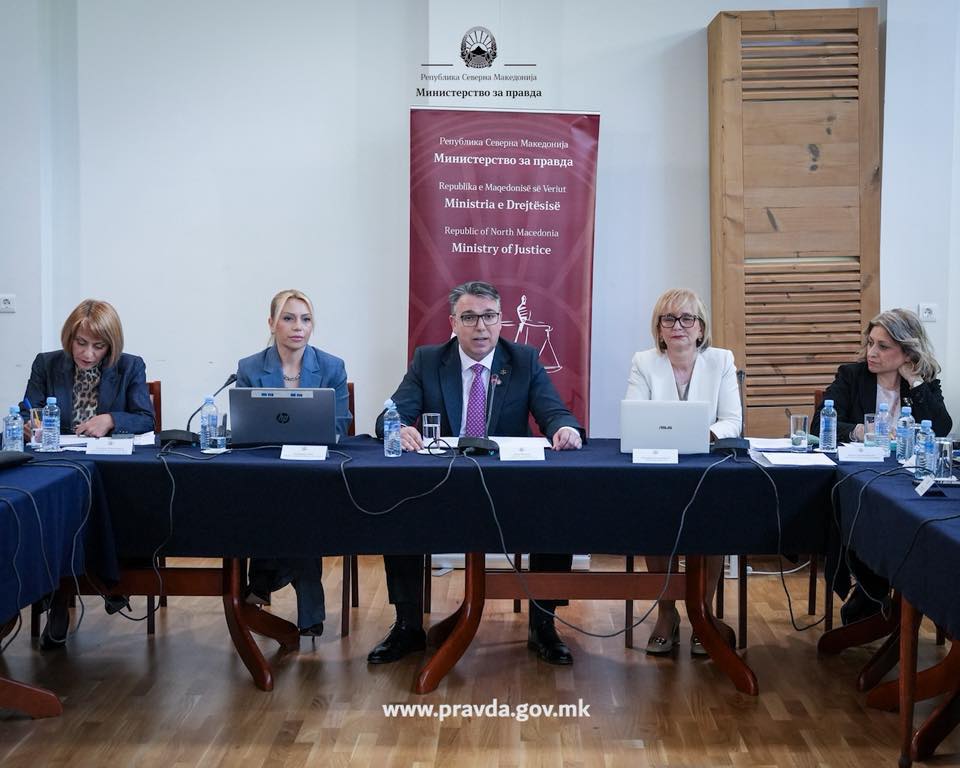

Today, the Ministry of Justice organized an expert public debate on the Draft Law on Confiscation of Property in civil proceedings, with the participation of representatives of judicial institutions, judges, public prosecutors, state attorneys general, professors, experts and representatives of the international community.
In his address, the Minister of Justice, Igor Filkov, emphasized that the proposed legal solution represents a significant step in strengthening the rule of law, the fight against crime and corruption, and the protection of the public interest.
The Minister reminded that in March 2024, the first Law on Confiscation of Property in civil proceedings was passed, with which the Republic of Macedonia began to establish a modern mechanism for confiscation of property for which there is a well-founded suspicion that it was acquired from illegal sources, regardless of the outcome of the criminal proceedings.
"A series of analyzes of the existing legal provisions and consultations with the professional and academic public, institutions and international partners, determined the need for more precise and clear regulation of several issues, with the aim of creating a functional and legally sustainable system," said Minister Filkov.
He emphasized that the new Draft Law foresees specifying the conditions for conducting proceedings, clearly defining the competences of the institutions, establishing mechanisms for financial analysis and determining the disproportionality between property and legal income, regulating measures for securing property, as well as protecting the rights of affected and conscientious persons.
The legal decision is based on the principles of legality, proportionality, impartiality, confidentiality, transparency and urgency, while its purpose is not to punish, but to protect the public interest and prevent possession of illegally acquired property.
The Ministry of Justice remains committed to creating legal solutions that will enable an effective fight against illegal enrichment, corruption and organized crime, as well as strengthening citizens' trust in institutions and justice.