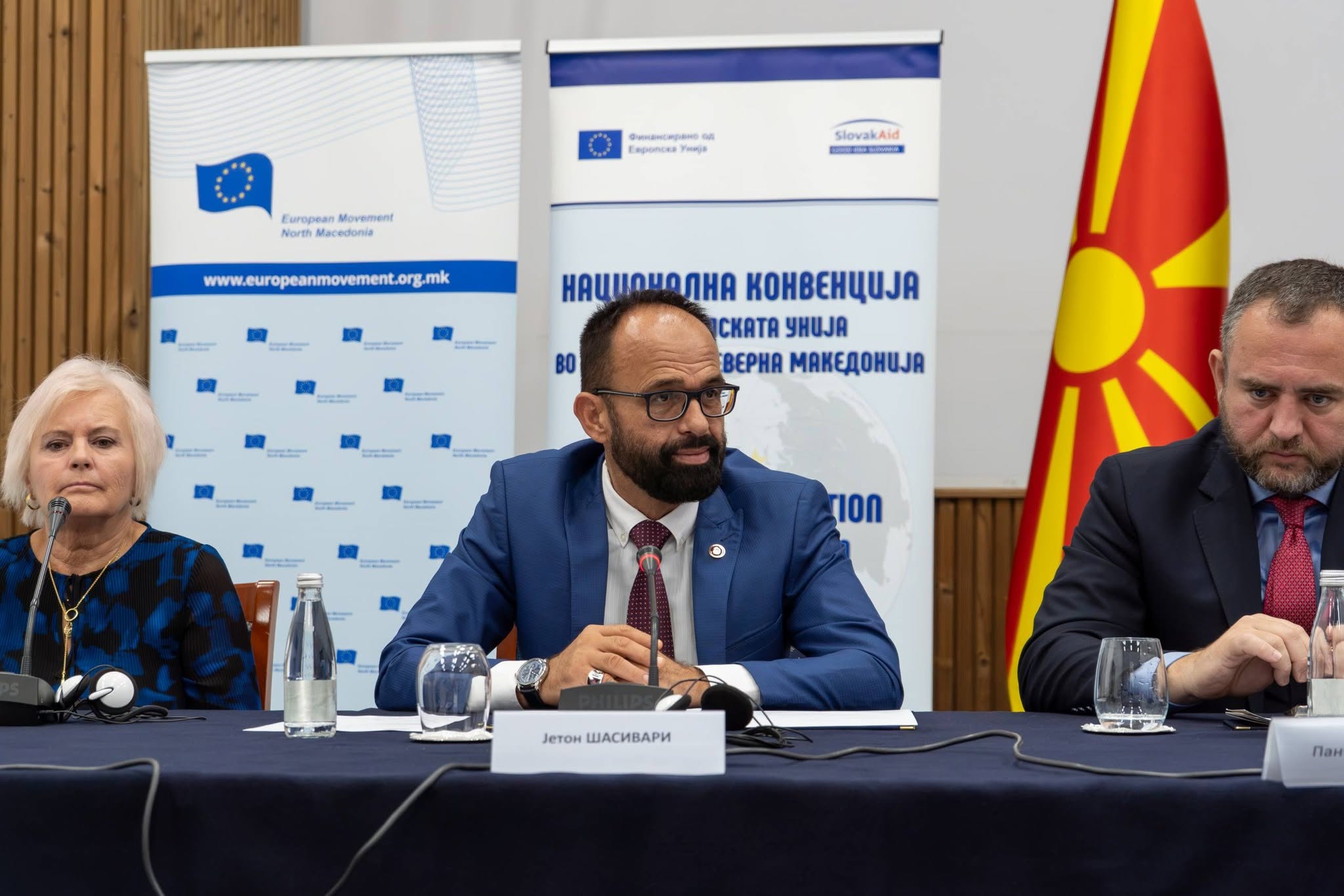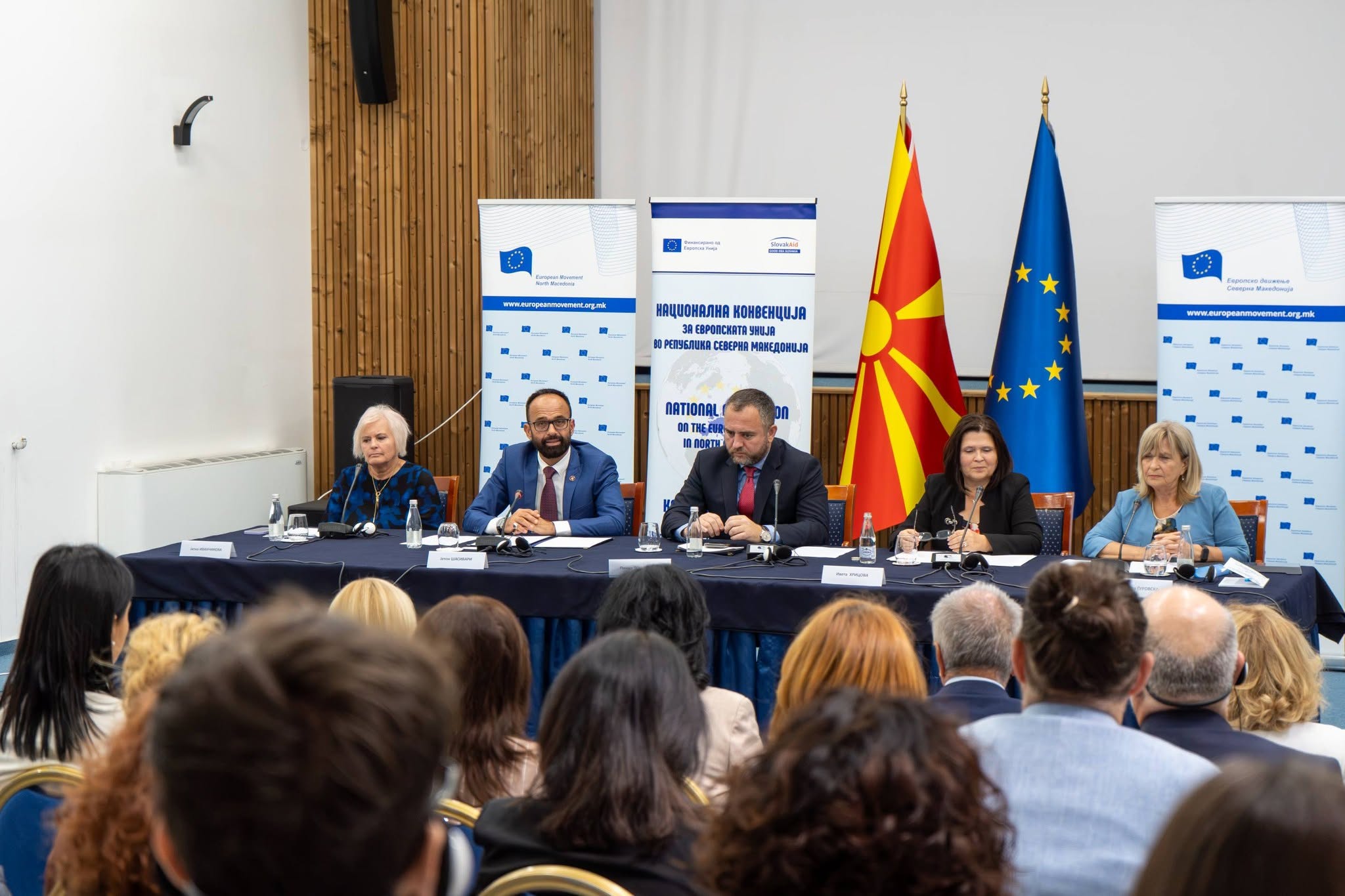
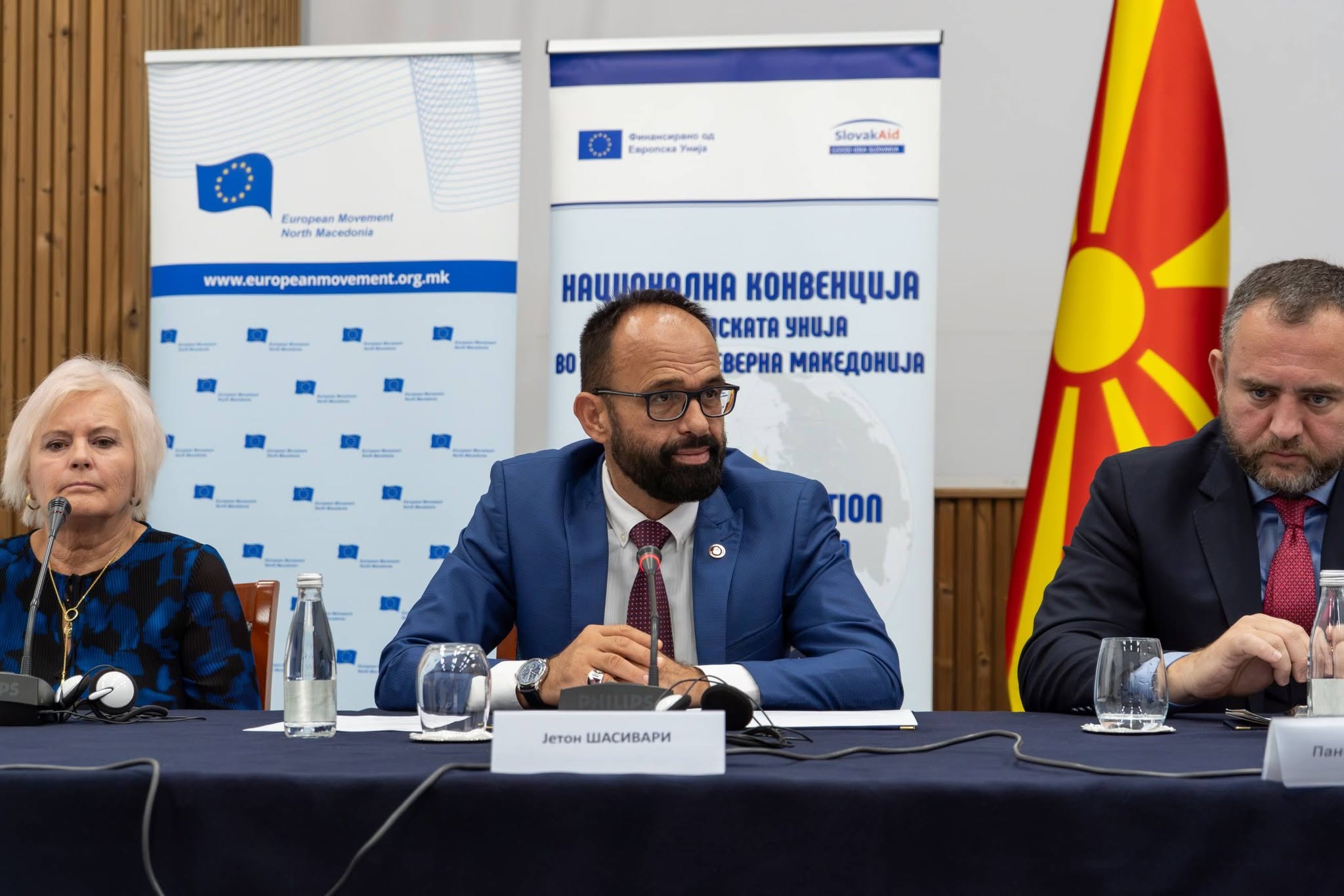
The Minister of Justice, Jeton Shasivari, addressing the forum "The Contribution of the Structured Dialogue to the European Integration Process of the Republic of North Macedonia: from the "Foundations" and Beyond", stressed that the country's European integration must be seen as a fundamental transformation of institutions and public services, and not just as a process of harmonizing legislation. "European integration is not just harmonizing legislation. It is a transformation of institutions, the way we work and the way citizens feel the results of reforms", said Shasivari.
He emphasized that the structured dialogue is of particular importance because it allows reforms to be seen as part of a broader European framework, which connects the rule of law, institutional capacity, human resources, digitalization, financial sustainability and the quality of public services. As the coordinator of Chapter 23 – Judiciary and Fundamental Rights, the Ministry of Justice is committed to the implementation of the reform priorities set out in the Reform Agenda, the recommendations of the European Commission, the assessment missions and the work of the Subcommittee on Justice and Home Affairs. “Through the Reform Agenda, reforms are linked to specific measures, deadlines and results.
Our task is for those results not to remain only in strategic documents, but to become visible in the functioning of institutions and in the services received by citizens,” the Minister stressed. Shasivari pointed out that Macedonia is already part of broader European mechanisms for the rule of law, the fight against corruption and the protection of fundamental rights, which opens up additional space for the exchange of experiences, practices and European standards. As one of the key tasks facing the Ministry of Justice, the need for reforms to have a real and sustainable institutional basis was highlighted. "For the first time, we must systematically answer not only the question of what we need to reform, but also how much it costs, what human resources we have at our disposal and what institutional capacity we need for the reforms to really work," stressed Shasivari.
In that context, the digital transformation of the judiciary was also highlighted, through the preparation of a new ICT strategy, which aims at a modern and integrated judiciary, more efficient procedures, greater transparency, better case management and easier access to justice. The optimization of the court network is also important, with the aim of better access to justice, more efficient allocation of resources and better service for citizens. "The task before us is to go wider: from harmonisation to implementation, from reform commitments to sustainable results and from a European perspective to European practice. That is the path we should continue on," said the Minister of Justice, Jeton Shasivari.